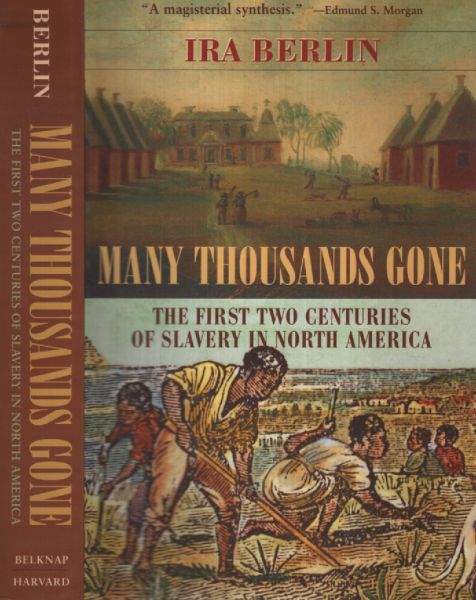
Many Thousands Gone. The First Two Centuries of Slavery in North America
World up to 1800
088622
The Belknap Press of Harvard University Press
Cambridge, Massachusetts - London, England
1998
15×22,5
meki
497
engleski
Price: 15,00 EUR
Ira Berlin redefines the history of American slavery by showing it was never a static institution, but a diverse and continuously evolving system. He shatters the modern myth of a monolithic "cotton kingdom," detailing how slavery's geography, labor types, and racial dynamics shifted over 200 years.Berlin divides the first two centuries of slavery into distinct geographical regions and generational phases. The first Africans to arrive were often treated as indentured servants or creoles. They worked alongside Europeans, possessed valuable cross-cultural skills, and frequently navigated fluid boundaries between freedom and bondage. As the demand for staple crops exploded, these diverse early societies were replaced by massive, brutal plantation complexes. Black people were stripped of their autonomy, subjected to horrific physical labor, and rigidly separated from the white population. Berlin argues that race and slavery were continually renegotiated. The early, flexible interactions between races eventually hardened into a brutal, hereditary racial hierarchy as the United States pushed toward political independence and grappled with the Enlightenment ideals that ultimately conflicted with human bondage.


