087136
New York
1954
10,5×18
meki
168
engleski
Price: 10,00 EUR
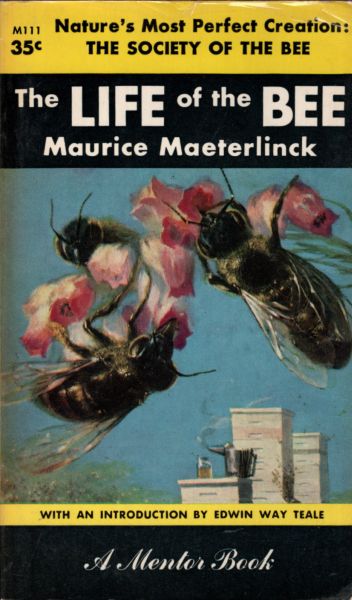
This timeless work by Nobel laureate Maurice Maeterlinck, first published in 1901, is not just a scientific manual on beekeeping, but a profound philosophical study of life, society, and nature. Maeterlinck, himself a passionate beekeeper, uses the life of bees as a mirror for the human condition, exploring themes of sacrifice, intelligence, and destiny. The book follows a bee colony through its annual cycle, focusing on several key phases: "Spirit of the Hive": The central concept in the book, describing an invisible force or collective intelligence that governs the complex social order of the hive, determining the work, swarming, and survival of the community. The Swarm: The dramatic moment when a large portion of the population, at the height of its prosperity, abandons its home to a new generation—an act that Maeterlinck sees as the ultimate example of sacrifice for the future of the species. The Life of the Queen and the "Bridal Flight": A detailed description of the role of the queen and her fateful flight, which is crucial to the continued life of the hive. The Massacre of the Drones: The brutal but logical end of the summer season when the males, no longer needed for reproduction, are eliminated in order to preserve food supplies for the winter. The book is written in an exceptionally rich and poetic style that goes beyond a mere enumeration of facts. Maeterlinck draws constant parallels between the bee's "perfect society" and human civilization, wondering whether human progress is necessarily associated with the sacrifice of individuality. The author was among the first to suggest that the survival of humanity directly depends on the survival of the bees, a position strongly supported by modern science and which speaks to the author's ecological vision. Maurice Maeterlinck (1862–1949) was a Belgian playwright, poet, and essayist, best known as a key figure in Symbolism in literature. In 1911, he received the


