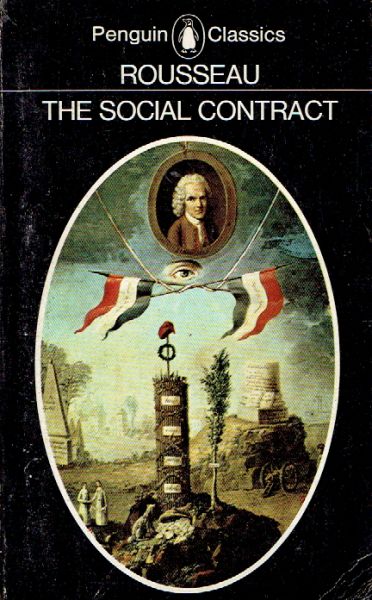
087945
Harmondsworth
1976
11×18
meki
188
engleski
Price: 7,50 EUR
Published in 1762, The Social Contract by Jean-Jacques Rousseau is a foundational masterpiece of modern political philosophy that famously argues legitimate political authority rests solely on the collective consent of the people. Opening with the iconic phrase, "Man is born free, and everywhere he is in chains," Rousseau explores how humanity transitioned from a peaceful, free "state of nature" into a corrupt, unequal civil society, and outlines how a just government can restore true freedom. Core Concepts: The General Will (Volonté Générale): This is the collective will of the citizens acting as a body, directed entirely toward the common good. It is not simply the sum of everyone's private desires; rather, it is what is best for the entire community. Popular Sovereignty: Rousseau argues that the people themselves hold absolute, inalienable, and indivisible sovereignty. Monarchs or elected officials are not rulers by "divine right"; they are merely agents executing the laws made by the people. "Forced to be Free": This paradox states that anyone who refuses to obey the general will must be compelled to do so by the body politic. Rousseau argues this is not tyranny because obeying a law you helped create as a citizen is the highest form of moral freedom.Transformation of Liberty:Natural Liberty: The unbounded freedom to do whatever one has the physical strength to achieve, which is lost upon leaving the state of nature.Civil & Moral Liberty: The higher freedom gained in society, where citizens are protected by laws they prescribe to themselves. Translated and introduced by Maurice Cranston.


