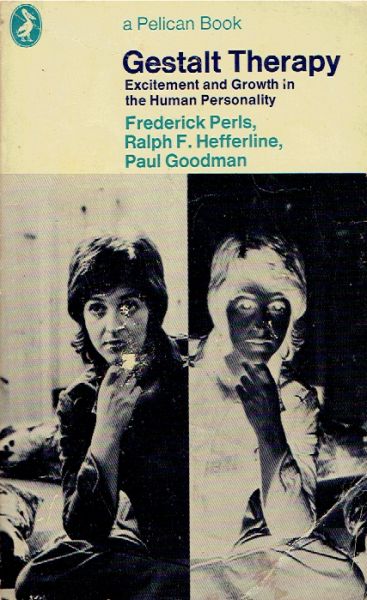
Gestalt Therapy. Excitement and Growth in the Human Personality
Psihologija
088322
Harmondsworth
1973
11×18
meki
535
engleski
Cijena: 15,00 EUR
This is the founding, seminal text of Gestalt therapy, published in 1951 by Frederick (Fritz) Perls, Ralph Hefferline, and Paul Goodman. Often referred to as PHG after its authors' initials, this revolutionary book shifted the psychological landscape away from looking back at the past and toward exploring real-time, present-moment awareness and environmental contact. The book introduced a radical framework for human potential, organized around three main concepts: The Contact Boundary - Experience happens entirely at the interface between the organism and the environment. Growth relies on how effectively a person manages this boundary. Excitement - This refers to the physiological arousal and undifferentiated energy generated during new experiences. When fear or anxiety blocks this excitement, human growth stalls. Creative Adjustment - Neurosis is not just a disease; it is an outdated way of adapting to the environment. Therapy focuses on finding fresh, creative adjustments to life in the present moment. The work established a definitive break from traditional psychoanalysis. Instead of looking at people as passive victims of their past, the authors framed individuals as active, self-regulating systems capable of constant personal transformation. The book serves as the foundational reference point for Gestalt training worldwide.


