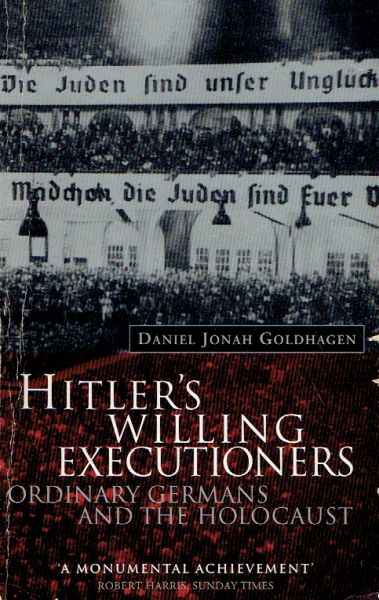
Hitler's Willing Executioners. Ordinary Germans and the Holocaust
Židovi - knjige
087780
London
1997
12,5×20
meki
631
engleski
Cijena: 18,00 EUR
In this book (1996) Daniel Jonah Goldhagen makes the provocative argument that ordinary Germans were not only conscious participants in the Holocaust, but also its willing perpetrators. The author argues that German culture had been permeated for centuries by a specific kind of anti-Semitism that saw Jews as an evil that needed to be "eliminated" from society. He points out that tens of thousands of "ordinary" Germans who were neither fanatical Nazis nor members of elite SS units participated in the killings. The book provides evidence that the executioners were often not forced to kill; many could refuse to participate without serious punishment, but chose to kill with zeal. Goldhagen describes how the perpetrators often tortured their victims and proudly posed for photographs with them, suggesting that they believed in the rightness of their actions. The book sparked one of the most heated historical debates of the late 20th century. Many scholars, such as Christopher Browning, have criticized Goldhagen for neglecting other factors such as peer pressure, obedience to authority, and the bureaucratic structure of the Third Reich. Despite the criticism, the book shifted the focus of the investigation from Hitler and the top brass to the role of wider German society in the genocide. The author was the recipient of the prestigious German Democracy Prize in 1997. His key message in this book is that the Holocaust was not the work of a handful of ideologues, but a massive national project in which ordinary citizens participated, guided by deeply held beliefs.


