087795
Cambridge, Massachusetts
1997
15,5×23,5
meki
548
engleski
Cijena: 30,00 EUR
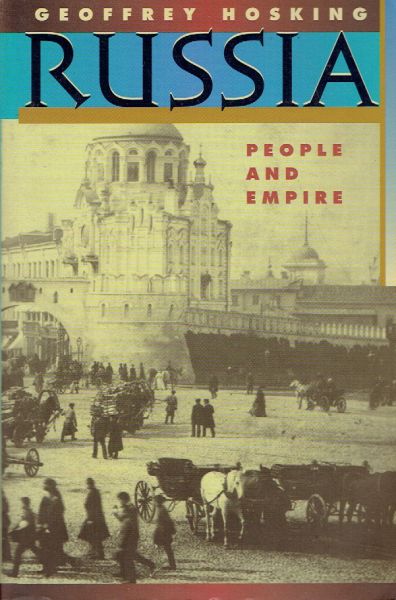
In this seminal work historian Geoffrey Hosking offers a provocative argument about how the construction of a vast empire prevented the development of a modern Russian national consciousness. Hosking argues that Russia is “an empire that never became a nation.” The constant need to expand, defend, and govern a vast, multiethnic territory drained the resources of the Russian people and prevented the development of civil institutions. The empire created a deep divide between a Westernized elite (the nobility) and a traditional peasantry. These two worlds never managed to unite in a common sense of belonging to a single nation. Orthodoxy failed to act as an integrating factor for the entire nation because the church was too subordinate to the state interests of the empire. The Bolshevik Revolution did not break the imperial pattern, but replaced it with a new, “universalist” Soviet empire. The book analyzes the period from the conquest of the Kazan Khanate (1552) under Ivan the Terrible to the fall of the Romanov dynasty (1917). Geoffrey Hosking is a retired professor of Russian history at University College London and is considered one of the leading experts on Russian and Soviet history.


