087030
London
1985
13×19,5
meki
469
engleski
Cijena: 10,00 EUR
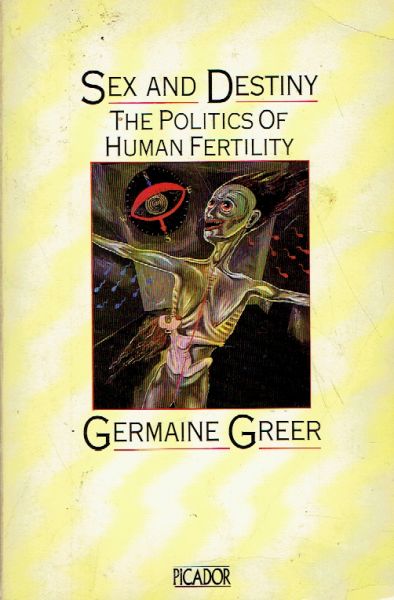
This book, published in 1984, is a provocative critique of Western attitudes toward fertility, family, and population policy by author Germaine Greer. In this book, Greer departs significantly from some of the ideas presented in her earlier work The Female Eunuch, advocating a return to more traditional structures and criticizing Western imperialism in the form of family planning. Greer argues that contemporary Western society has become fundamentally hostile to children. He believes that the low birth rate in the West is not the result of concern about overpopulation, but the fact that Westerners no longer love children and see them as a burden to their materialistic lifestyle. The author fiercely criticizes Western family planning programs in developing countries, calling them a form of neocolonialism. He believes that these programs are often motivated by racism and classism, with the goal of reducing the number of poor and non-white populations in order to protect the living standards of rich nations. In contrast to the "isolated" nuclear family in the West, Greer praises the extended family structure in non-Western cultures. She argues that such systems provide better support for mothers, children, and the elderly. Greer advocates traditional and natural methods of fertility management, such as abstinence (chastity) and extended breastfeeding, rather than relying on pharmaceuticals and technology imposed by the Western market. She challenges the notion of a "population explosion" as a misconception rooted in cultural prejudice, arguing that the real crisis is not the number of people, but the way the West is spending resources. The book caused a storm of reactions upon publication. Many feminists were shocked by her apparent advocacy of chastity and criticism of modern contraception, believing that it threatened women's right to choose and control their own bodies. Critics have often pointed out the inconsistenc


