085854
New York
1962
20,5×26
meki
227
engleski
Cijena: 18,00 EUR
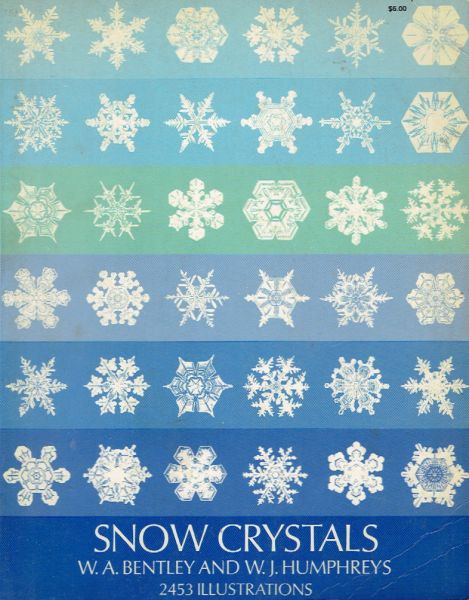
Wilson Bentley (1865–1931), an American farmer and pioneer in photomicrography, was the first person to successfully photograph a single snow crystal, revealing their intricate and unique designs to the world. His work established the now-common belief that no two snowflakes are exactly alike. Bentley, known as "Snowflake Bentley," developed his own pioneering methods to capture the ephemeral beauty of snow crystals. He modified a standard bellows camera and attached it to a compound microscope to take highly magnified photographs of individual flakes. Working in an unheated shed in Jericho, Vermont, he used a black velvet-covered tray to catch snowflakes and a fine wooden pick or a feather to transfer a chosen crystal to a pre-cooled glass slide. To ensure the delicate white crystals stood out, he would painstakingly scrape away the emulsion surrounding the snowflake image on duplicate negatives, resulting in his trademark dramatic black backgrounds in prints. It took him two years of trial and error before he captured his first successful image on January 15, 1885. His detailed documentation advanced the study of meteorology and contributed to the understanding of atmospheric ice crystal formation. Scientists like Ukichiro Nakaya later confirmed Bentley's hypothesis that crystal form depends on temperature and humidity conditions during formation. Shortly before his death in 1931, his life's work was compiled into this monograph "Snow Crystals". Bentley's striking images brought the hidden "miracles of beauty" of the natural world to the public. His work is a testament to the idea that science and art can coexist, as a simple self-educated farmer from Vermont transformed how people perceive something as common as snow.


