086930
Moscow
1967
12,5×20
meki
80
engleski
Cijena: 18,00 EUR
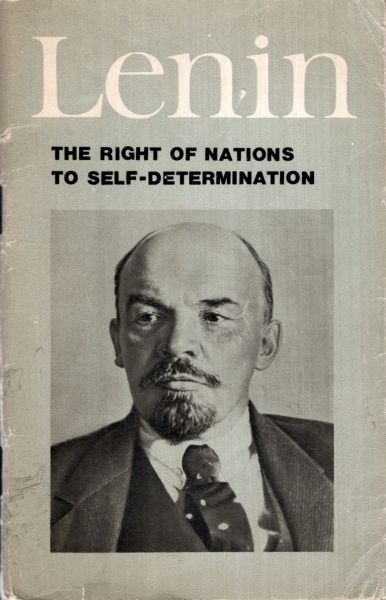
This is a key theoretical work by Vladimir Lenin written in 1914. In it, Lenin defines the right to self-determination primarily as the right to political secession from an alien nation-state and the establishment of one's own, independent nation-state. Lenin's argument is based on a historical-economic analysis of the development of capitalism. Capitalism requires victory over feudalism and the conquest of the domestic market, which is best achieved in politically unified territories with a single language (nation-states). For Lenin, self-determination is not just "cultural autonomy", but the exclusive right to complete state secession. Difference between nations: Oppressive nations (like Russia at the time): The proletariat of that nation must fight for the oppressed peoples' right to secede in order to prove its internationalism. Oppressed nations: The proletariat must strive for unity with the workers of the oppressing nation in order to prevent the national bourgeoisie from exploiting the movement for its own interests. Much of the work is a polemic against the views of Rosa Luxemburg, who considered the demand for self-determination "impractical" and played into the hands of bourgeois nationalism. Lenin responded that her rejection of self-determination actually helped great-power nationalism (such as Russian chauvinism) by justifying the forcible retention of peoples within empires. This work became a cornerstone of Bolshevik policy after the October Revolution of 1917, granting temporary independence to countries such as Finland and Poland. It also had a strong influence on anti-colonial movements in Asia and Africa throughout the 20th century. The book is underlined in several places with handwritten notes.


