087778
London
1976
13×19,5
meki
224
engleski
Cijena: 15,00 EUR
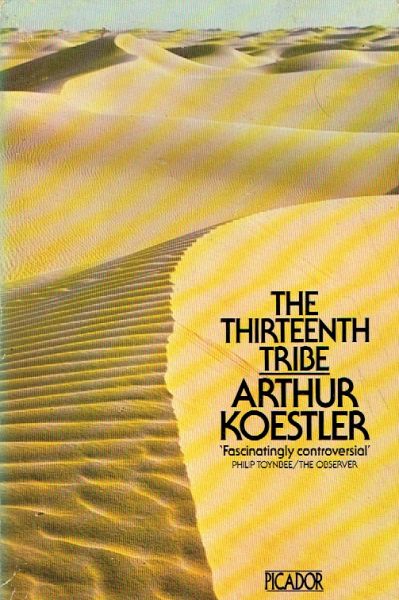
Published in 1976, the book has become one of the most controversial works on Jewish history. Koestler, a renowned writer and intellectual of Hungarian-Jewish descent, argues that most modern Ashkenazi Jews (European Jews) are descended not from the biblical Israelites but from the Khazars, a Turkic people from Central Asia. Koestler claims that the Khazar Empire, which stretched from the Caspian Sea to the Black Sea, converted en masse to Judaism in the 8th century in order to maintain political independence between the Christian Byzantine Empire and the Muslim Caliphate. After the empire's collapse in the 12th and 13th centuries, the population supposedly migrated westward (today's Poland, Ukraine, and Russia). According to Koestler, these "Khazar-Jews" formed the core of the modern Ashkenazi population. The author publicly stated that his goal was to eradicate anti-Semitism. He believed that if he could prove that European Jews were not biologically related to the biblical Jews, the racist theories of the "Jewish race" and "Christ-killers" would lose their meaning. Although the book became a bestseller, most historians and geneticists reject its conclusions. Scientific consensus: Modern genetic research shows that Ashkenazis share significant common roots with Near Eastern and Mediterranean populations, which refutes the thesis of an exclusively Khazar origin. Despite Koestler's intentions, the theory has been embraced by various anti-Semitic and anti-Zionist groups to deny the historical connection of Jews with Israel. Historians point to the lack of archaeological evidence for mass migrations of the Khazars to Europe and the selective use of historical sources. The title "The Thirteenth Tribe" alludes to the Khazars becoming an additional, forgotten tribe in addition to the original twelve tribes of Israel. The book is now largely considered a fascinating but historically inaccurate work that speaks more about t


